

Archive for January 2025
Zeyu Zheng Receives Peter D. Welch Early Career Award

Zeyu Zheng has been honored with the inaugural Peter D. Welch Early Career Award by the INFORMS Simulation Society (I-SIM). This award recognizes early-career researchers for their exceptional contributions to the field of simulation. Zheng received the award at the December 2024 Winter Simulation Conference, where he and his co-authors also won the Best Theoretical…
Read MoreBerkeley IEOR Welcomes Carolyn Yee as New Advisory Board Chair

Berkeley IEOR is pleased to announce the appointment of Carolyn Yee as the new chair of the department’s Advisory Board. A member since 2021, Carolyn has been a driving force in advancing the department’s mission. Among her notable contributions, Carolyn was keynote speaker for the IISE student chapter conference and played an instrumental role in…
Read MoreAncient Wisdom: Exploring the Intersection of AI, Art, and Nature

The cover of the winter 2025 edition of Berkeley IEOR Magazine showcases artwork from Ancient Wisdom: Trees, Time, and Technology, an exhibition by Ken Goldberg and Tiffany Shlain currently on view at the Skirball Museum in Los Angeles through March 2, 2025. Part of the Getty Museum’s city-wide Pacific Standard Time quadrennial, the exhibit examines…
Read MoreBerkeley IEOR PhD students Win Best Theoretical Paper Award
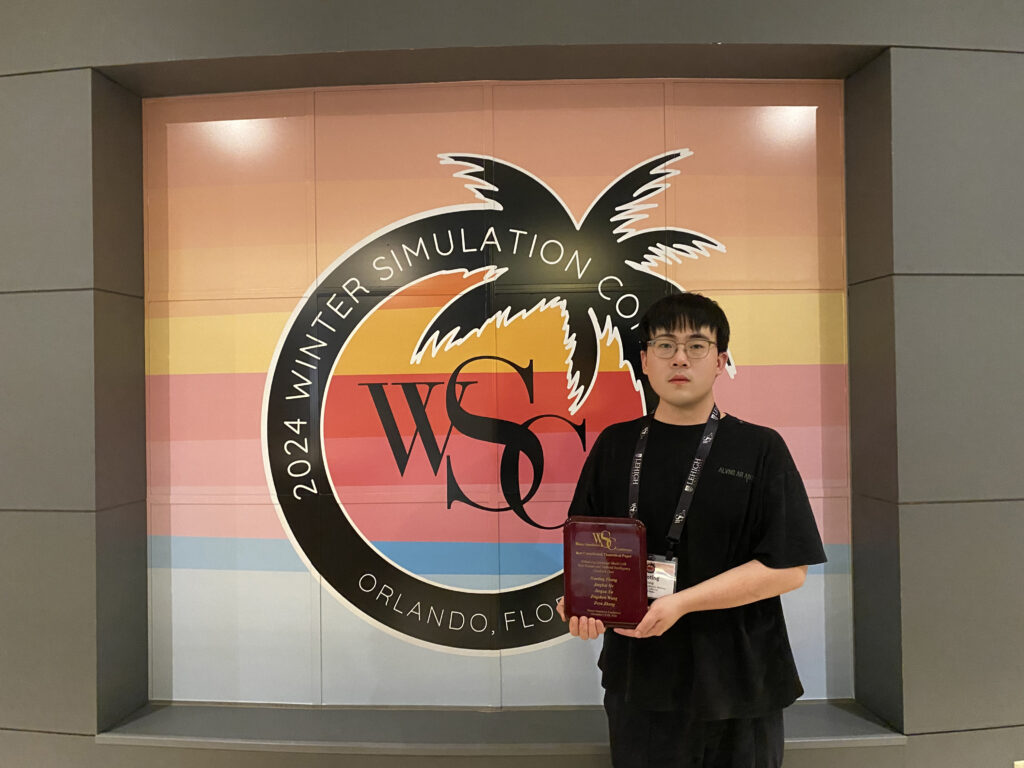
Berkeley IEOR PhD students Haoting Zhang, Jinghai He, and recent alum Jingxu Xu (PhD ’24) were honored with the Best Theoretical Paper Award at the 2024 Winter Simulation Conference held in Orlando, Florida. Their award-winning paper, Enhancing Language Models with Both Human and Artificial Intelligence Feedback Data, explores innovative methods to improve AI performance through…
Read MoreTraining Smarter AI: New Research Integrates Human and Machine Feedback

AI models rely heavily on feedback to refine their outputs and meet user needs. While human feedback is highly effective, it is often expensive, time-intensive, and limited by data privacy constraints. For example, training an AI system to detect early signs of cancer in medical scans relies on radiologists to verify predictions and provide annotations.…
Read More